Using a high-lift jack safely
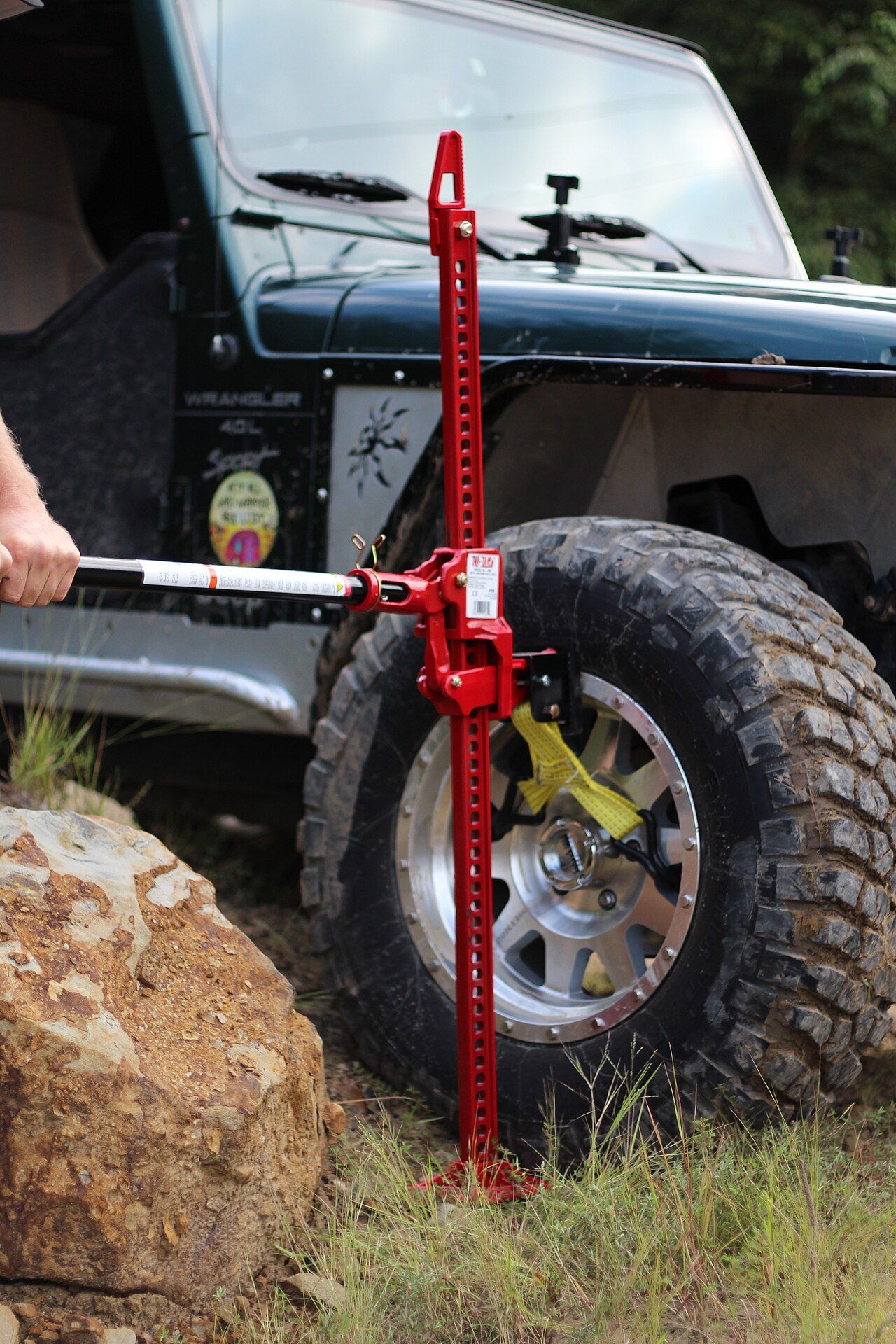
A high-lift jack can lift a vehicle far higher than a bottle jack, and that height is exactly what makes it dangerous. Use it only on a rated lift point, on a base, with the wheels chocked, the handle kept up and clipped, and never with any part of you under the load.
Are high-lift jacks dangerous?
Honest answer: yes if misused; key hazards per maker: load slipping off, handle kick, unexpected movement. Quote manual warnings.
Warnings
Warning box before steps: never under load; chock and block; keep handle upright/clipped and head clear; not on curved/tubular/plastic bumpers; rated capacity from the jack's label/manual only.
Where you can lift (and where you can't)
Rated jacking points, sliders with jack points, approved adapters (e.g. Hi-Lift Bumper Lift / Lift-Mate per manual); a diagram per vehicle type. Bases on soft ground.
- Lift points
- A base for soft ground
How to use a high-lift jack safely, step by step
Numbered steps.
Other jobs: winching, spreading, clamping
Manual lists these uses; caution; link winch page.
Alternatives
Bottle jack, exhaust jack, boards first.
Care and storage
Inspect, lubricate (not self-lubricating per manual), decal, genuine parts, mounting securely.
FAQ
Related on Dirt & Distance
Lead photo: Dowdensl · CC BY-SA 4.0 · Source