How to winch safely: anchors, angles and the safe zone
Safe winching is mostly rigging and distance: a solid anchor protected with a tree saver, rated shackles, the minimum wraps left on the drum, a damper on the line and everyone well clear while you pull in short, steady stretches. Follow your winch maker's manual first; this guide walks through the method and the reasons behind each step.
Before you winch: is there an easier way?
Energy ladder; link boards, kinetic.
Warnings
Warning box: never exceed rated capacity of winch, line, shackles or anchor; never use a winch to tow or to secure a load (WARN); gloves; never step over or straddle a loaded line; hands clear of fairlead; bystanders outside the maker's safe distance.
The kit
Tree saver, snatch block, shackles (steel vs soft → link), damper, gloves; first mention of winch links /gear/winches/.
How to winch safely, step by step
Numbered steps.
Anchors
Trees (protector low, healthy, appropriate diameter per maker), vehicles, ground anchors; no invented diameters.
- Winching from a tree
- Using another vehicle
Angles and snatch blocks
Straight pulls, redirecting, double-lining reduces winch load (WARN); link snatch-block page (Q2).
Winching backwards with a front winch
Redirect via snatch block and anchor; demand query.
Synthetic rope or steel cable?
Safety-relevant differences in one paragraph; link owner (Q1).
What size winch?
One line + link to /gear/winches/what-size-winch/ (owner of the GVWR × 1.5 guideline).
FAQ
Related on Dirt & Distance
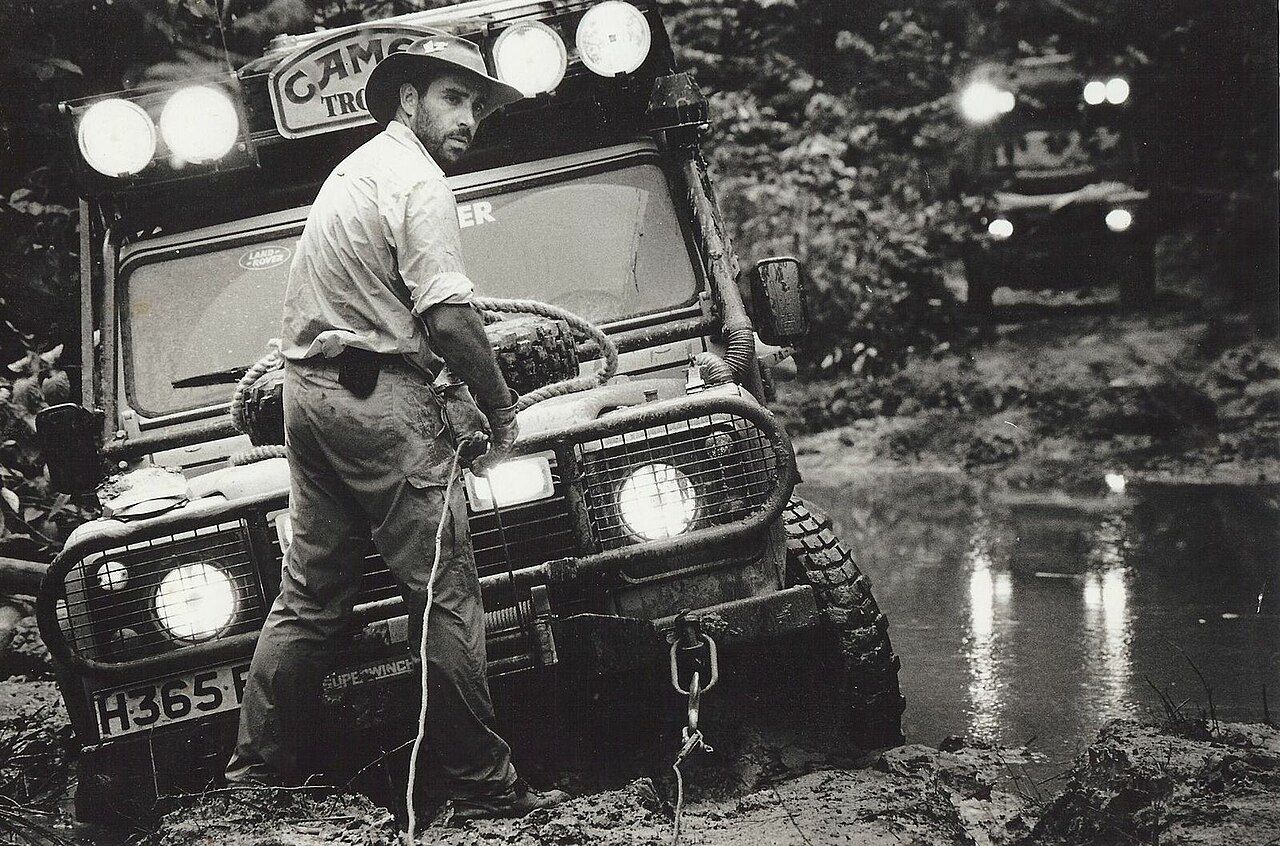
Lead photo: Fluffyghost · CC BY-SA 4.0 · Source