Steel jerry cans: the 1937 design nobody has beaten
Our 90-day test of a steel jerry can: leaks, gasket, rust, pouring and weight, plus why the 1937 design still works and who should buy plastic instead.
We may earn a commission when you buy through links on this page. As an Amazon Associate I earn from qualifying purchases. Affiliate links never decide a verdict. How we make money
Every overland rig photo you have ever seen has one: a flat steel can, three handles across the top, an X pressed into its sides. It is so familiar it has stopped looking like a design at all. It is one, and a very good one, and it is older than almost everything else on the roof rack.
Where it came from
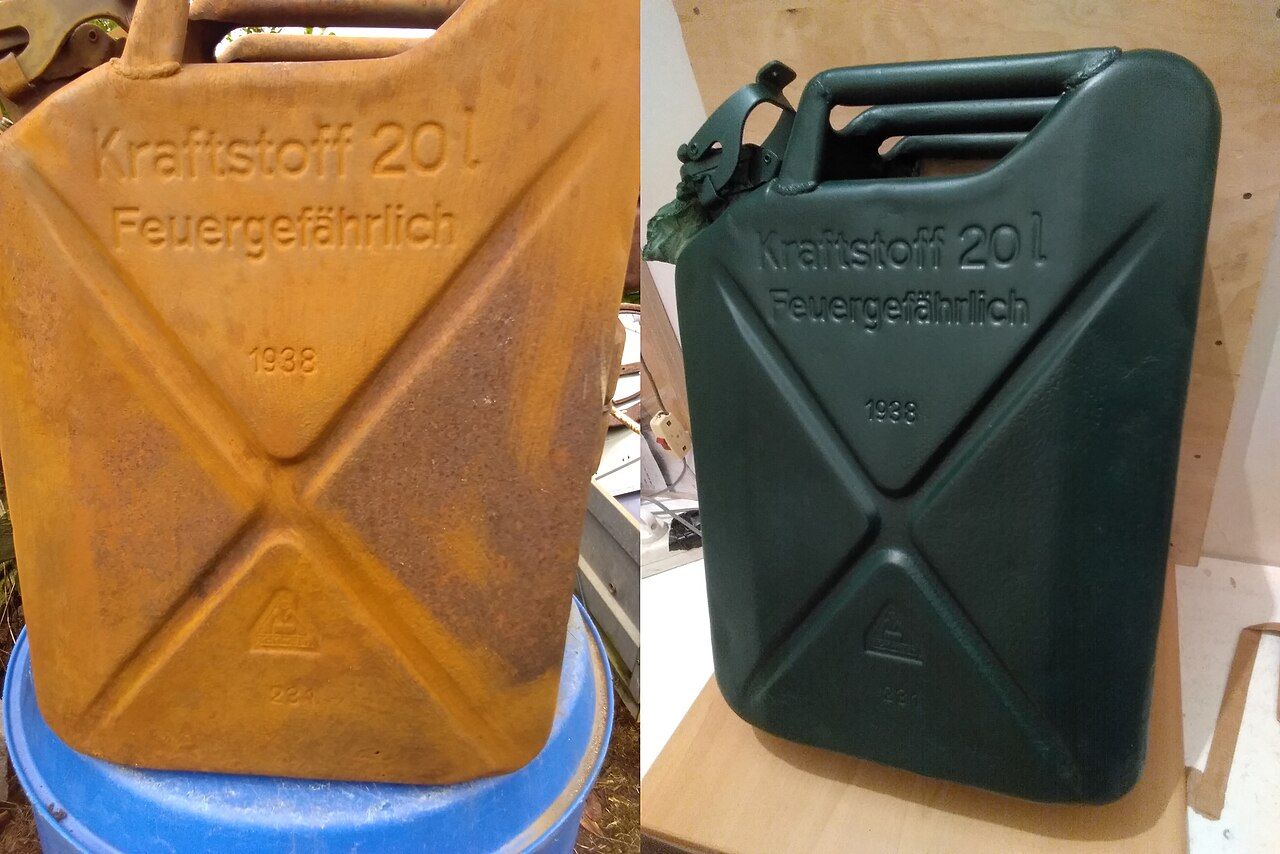
The can was first developed in Germany in 1937, by the Müller engineering firm in Schwelm, to a design by its chief engineer, Vinzenz Grünvogel. The army wanted a soldier to be able to carry two full cans or four empty ones, which is why there are three handles. The cans in our photograph are stamped 1938.
The name came later. “Jerry” was wartime slang for Germans, and when the Allies copied the design, the name stuck to the copies too.
The recessed, welded seam is the detail that matters. It is why a good can doesn’t leak.
What makes it work
- Three handles: one person, two full cans, or four empty ones.
- A big spout and a flip-top closure: fast to fill and fast to pour, with no tools.
- A recessed welded seam: stiffens the can and keeps the seam out of harm’s way.
- Pressed indentations: let a full can survive a fall from a vehicle.
- A flat, rectangular body: it stacks, and it straps down flat.
The wartime American copy simplified the side pressings into the plain X most cans carry today, and swapped the recessed welded seam for rolled seams, which were prone to leaking. That is still the first thing to check on any can you buy.
Carrying one
Strap a full can down properly: 20 litres of fuel weighs roughly 15 to 17 kilograms, and the steel can adds a few more.
How we’re testing
Our long-term test of steel and plastic cans is under way. Results, conditions and a verdict publish here when it finishes.